


How to Use a Bio Fuel Fireplace
If you’re looking for an eco-friendly way to heat your home, you should consider installing a bio-fuel fireplace. They generate more heat than traditional wood and gas fireplaces, do not require an external chimney, and are very easy to install. Keep reading to learn more about this environmentally-friendly option. Learn more about how to use bio fuel fireplaces.
Biofuel fireplaces generate more heat than wood or gas fireplaces
Biofuel fireplaces are an excellent option to heat your home without the cost and maintenance required by a traditional fireplace. They generate the same amount of heat like a gas or wood fireplace however they are cleaner and produce less fumes. They are an excellent alternative fuel source and a great option for renters. Since they will never run out of fuel, you can enjoy for a long time without having to replace them.
It is important to remember that not all bioethanol fireplaces are in the same way. Fake products are on the market that could be dangerous. It is important to store bioethanol fireplace suites properly, out of reach of children. Since bioethanol is a liquid it is essential to store it in a cool area and away from reach of children.
The downside of a biofuel fireplace is that it does not produce an enormous amount of heat. They can produce 5,000 to 6,000 Btus however, you are unable to refill it after the fire is out. But a fireplace that is filled can maintain a flame for a long time. Bioethanol fireplaces aren’t dependent on a chimney or flue, bioethanol fireplace insert unlike gas and wood fireplaces.
Biofuel fireplaces also don’t emit harmful gases. They can be used indoors and they are perfect for indoor use. The cost of biofuel is different from location to location however it’s around $10 for a Liter. Similar to a 4000 BTU gas fireplace however costs about $0.50 an hour to run.
Biofuel fireplaces are becoming more popular, however they have some disadvantages. Biofuel fireplaces aren’t recommended for small spaces, unlike wood or gas fireplaces. They can set off smoke detectors much more frequently than large wood or gas fireplaces. They shouldn’t be recommended for rooms that have poor ventilation. They are not recommended for use in outbuildings.
Biofuel fireplaces are also more efficient than traditional gas fireplaces. Because they are more efficient, they don’t require vents or chimneys. They generate more heat than their gas counterparts, and are more environmentally sustainable. They can help lower your monthly energy costs by producing more heat than their gas counterparts.
They are also environmentally friendly.
Biofuel fireplaces are a great choice for people who want an open flame in their home without causing greenhouse gas emissions. The alternative fuel is made from potatoes, corn, or sugar, and doesn’t harm the environment in any way. They also produce no smoke or soot which makes them safe to use indoors. Bioethanol fireplaces don’t need a flue or chimney, and are easy to clean.
Installing bio-ethanol fireplaces requires no special tools. The cost of bioethanol can differ depending on the location however, the price of the fuel is comparable to that of a wood-burning fireplace. Remote controls are available on some fireplaces. They could be beneficial if you don’t have the necessary tools.
Another advantage of eco-friendly fireplaces is their high efficiency. Wood fireplaces require large quantities of wood. However, the environmental impact of using wood will be contingent on the wood’s source. Although some companies offer wood that is sourced from local forests, this isn’t always possible. Sometimes it is required for larger quantities of wood be harvested from forests. Deforestation can cause deforestation , which affects not just species, but also desertification and degradation of soil.
Bio-ethanol is a renewable fuel source. Bio-ethanol is a renewable fuel source that does not produce toxic gases or waste like coal. Bio-ethanol fireplaces do not require a chimney, flue or chimney. Because bio-ethanol is an environmentally friendly product and eco-friendly, it is a popular choice for both homeowners and building businesses.
Bio-ethanol fireplaces are also eco-friendly and do not release smoke. They don’t need a chimney or smoke venting professional service. Bio-ethanol fireplaces don’t require vents or flues, and they are easy to install wherever. They are a great option for those who have limited space.
Traditional wood-burning fireplaces aren’t efficient. Fireplaces that are open emit particles and smoke into the atmosphere. These gases are harmful to our health and can cause climate change. The British government is aware of the problems caused by wood-burning fireplaces, and have set up strict rules for fireplaces that burn wood to reduce the emissions of harmful gases.
They don’t require chimneys or an outside flue.
If you’re looking for an eco efficient and affordable method to warm your home, consider installing a bio-fuel fireplace. They don’t require chimney or outside flue and can be installed in any spot. Bio fuel fireplaces also burn cleanlyand without leaving any carbon or soot emissions behind.
Bio-ethanol fuel is used to heat bio fireplaces. This fuel is safe and produces heat and carbon dioxide. Bio fireplaces don’t produce harmful smoke like other fireplaces. They also are carbon neutral as the CO2 that releases during burning is captured by plants and turned into food waste.
As long as you are taking some precautions biofuel fireplaces can be used in a safe manner. First of all, it is important to use wood that has been properly seasoned. Logs that have been dried for at minimum six months are the best. This can prevent the buildup of creosote and makes it ideal for making warm fires. Hardwood logs perform better in the indoor space than other kinds of wood due to the fact that they produce more heat and have less creosote.
Another advantage of bio-fuel fireplaces is that it does not require an outside chimney. This is a huge benefit for homeowners as traditional fireplaces require a chimney or exhaust flue. While a chimney is a barrier to smoke escaping, it can be expensive to build.
Bioethanol, a fuel derived from plants is a green fuel. It emits no harmful emissions and can be used indoors. And unlike gas-burning fire places, biofuel fireplaces don’t require chimney. They are cooled through window vents.
A biofuel fireplace is among the most eco-friendly fireplaces available on the market. The fuel burns cleanly and doesn’t emit smoke or biofuel fireplaces fumes. They are simple to install and can be installed anywhere there is a chimney or a flue. Biofuel is also available in fireplaces with a variety modern designs and styles.
Another advantage of bio fuel fireplaces is their aesthetic appeal. Since they do not emit dangerous fumes, bio fuel fireplaces are an aesthetically aesthetically pleasing alternative to traditional wood fireplaces. They produce steam, heat and carbon dioxide. These are all reabsorbed by plants and are safe for the environment.
They are easy to set up
Biofuel fireplaces are an excellent option for those looking for an eco-friendly fireplace that is safe burning and sustainable. They require no chimney or electrical line and are very easy to set up. They are also easy to use. The majority of bio-ethanol fireplaces have an easy start button. However the higher-end models will come with a remote control.
Bio-ethanol fuel is used to create bio fireplaces. It burns cleanly and produces heat, carbon dioxide, and steam, without any harmful emissions. Additionally, bio fuel fireplaces are carbon neutral. The carbon dioxide produced by the combustion process is taken up by plants and then converted to food waste.
Bioethanol fireplaces are an excellent alternative to traditional fireplaces. They are environmentally friendly and easier to set up than fireplaces that burn wood. Because bioethanol is made from plants, they don’t produce soot or smoke. They emit the same amount of carbon dioxide as candles however, at a much lower amount. This means that you can put up a bioethanol fireplace anywhere even in an apartment.
If you’re not confident about the safety of bioethanol fire suite fireplaces, you can try other options. They have been tested and certified safe by TUV. It is not advisable to leave a fire in a bioethanol area unattended. Additionally, you could utilize a window vent to air out the room but only do this in the event of a stale air.
Installing a biofuel fireplace can be costly, ranging between $700 and $1400. The cost of a biofuel fireplace can vary in relation to its size and the design. Certain bioethanol fireplace insert – Http://info-mania.Ru, fireplaces come with remote controls and glass that has been tempered. These fireplaces are also expensive to build, so be sure you get someone to do it.
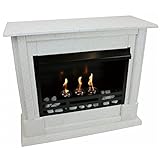 The cost of bioethanol fireplaces is perhaps the most important aspect. While some bioethanol fireplaces are priced at a few dollars, many gas fireplaces can cost anywhere from $2,000 to $10,000. They also require gas line installation, ductwork and chimney repair.
